
Chengli Dangerous Cargo Van Factory's First Big Deal: 2016
Date:2026-10-28
Page views:
As China's industrialization advances, requirements for safety and environmental protection keep rising. Explosion-proof vehicles have moved from flatbed to enclosed van transport. The series of explosive-material transport vehicles developed today are designed and produced according to national regulations for explosive transport and user requirements, fully meeting the Commission of Science, Technology and Industry for National Defense's Safety Technical Conditions for Explosive Material Transport Vehicles. They feature high body strength, fire/flame retardancy, rain protection, static spark prevention, smoke/heat alarm and anti-theft alarm.
Main transport categories for explosion-proof vehicles:
Class 1 dangerous goods (explosives): substances and articles with explosion hazard, e.g. TNT, dynamite, detonators, fireworks. Class/division numbers: 1.1D, 1.1B, 1.4G, 1.1G, 1.3.
Class 2 dangerous goods (compressed and liquefied gases): flammable mixtures of compressed gas, toxic and non-toxic compressed gas, e.g. butane, hydrogen, propane, acetylene, carbon dioxide. Division numbers: 2.1, 2.2, 2.3.
Class 3 dangerous goods (flammable liquids): any liquid with a closed-cup flash point at or below 60.5°C, e.g. paint, alcohol, acetone.
Class 4 dangerous goods (flammable solids): any material liable to spontaneous combustion or to cause/contribute to fire through friction, e.g. matches, sulfur, gelatin, white phosphorus. Division numbers: 4.1, 4.2, 4.3.
Class 8 dangerous goods (corrosives): liquids or solids that burn human tissue and damage metal and other articles, e.g. battery acid, sulfuric acid, sodium hydroxide, potassium hydroxide, mercury.
Production process of Chengli Oil-Chemical's dangerous goods van plant: outer panels use 1.2mm cold-rolled steel louvers formed in one step; inner lining is aluminum plate with good conductivity and ventilation holes; inner skeleton is a rectangular tube frame for solid stability; interior is filled with breathable, moisture-proof, flame-retardant extruded board; the four materials are composited by modern processes. Inside, cargo tie-down rings secure the load. The vehicle is equipped with a dedicated on-board smoke alarm, rear-door anti-theft device, static grounding strap, fire extinguisher and fire covers. The whole vehicle carries national-standard reflective markings and warning signs. Main media transported by explosive-material vehicles: black powder, compressed black powder, electric detonators, blasting explosives, igniting fuses, special pyrotechnic products, fireworks and firecrackers.
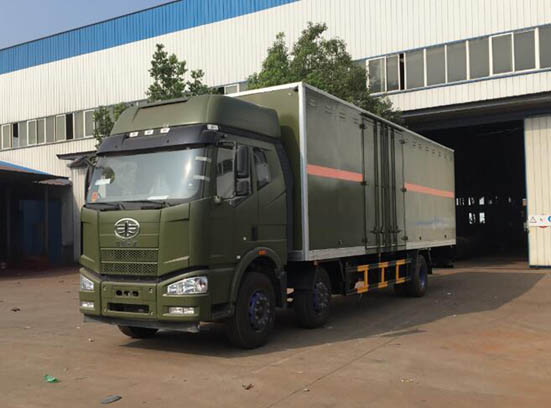
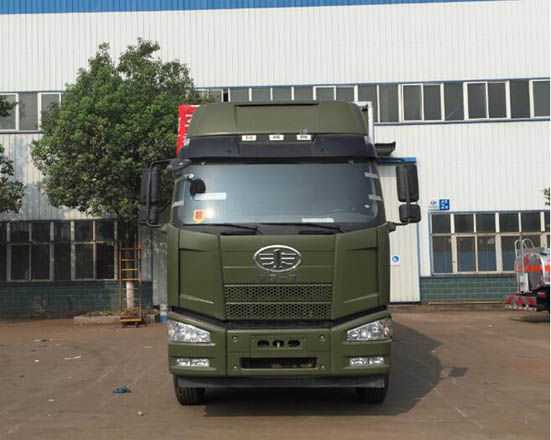
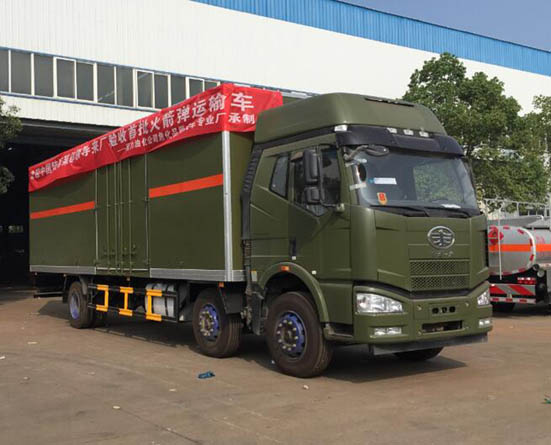
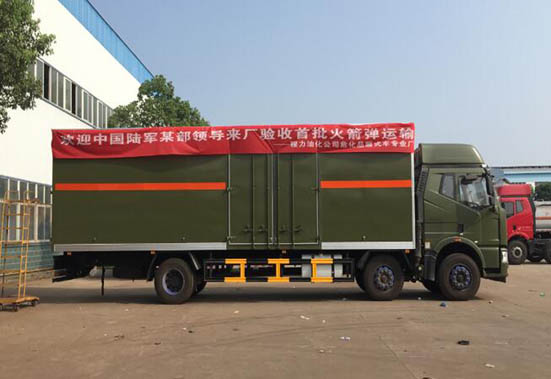
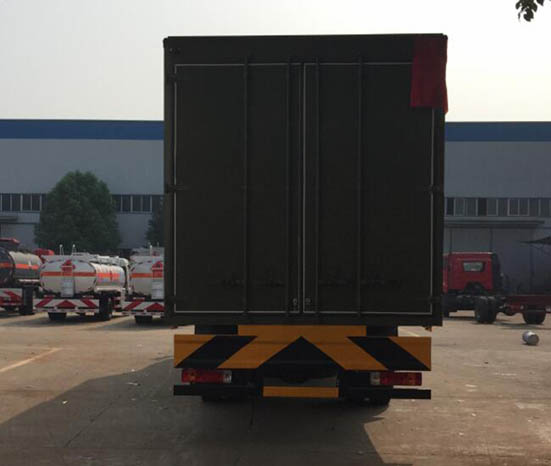
The first order from Chengli Oil-Chemical's dangerous goods van plant was a dedicated military rocket-launcher transport vehicle, which has now passed acceptance by a military unit and officially entered service. Product photos are shown below:
Main transport categories for explosion-proof vehicles:
Class 1 dangerous goods (explosives): substances and articles with explosion hazard, e.g. TNT, dynamite, detonators, fireworks. Class/division numbers: 1.1D, 1.1B, 1.4G, 1.1G, 1.3.
Class 2 dangerous goods (compressed and liquefied gases): flammable mixtures of compressed gas, toxic and non-toxic compressed gas, e.g. butane, hydrogen, propane, acetylene, carbon dioxide. Division numbers: 2.1, 2.2, 2.3.
Class 3 dangerous goods (flammable liquids): any liquid with a closed-cup flash point at or below 60.5°C, e.g. paint, alcohol, acetone.
Class 4 dangerous goods (flammable solids): any material liable to spontaneous combustion or to cause/contribute to fire through friction, e.g. matches, sulfur, gelatin, white phosphorus. Division numbers: 4.1, 4.2, 4.3.
Class 8 dangerous goods (corrosives): liquids or solids that burn human tissue and damage metal and other articles, e.g. battery acid, sulfuric acid, sodium hydroxide, potassium hydroxide, mercury.
Production process of Chengli Oil-Chemical's dangerous goods van plant: outer panels use 1.2mm cold-rolled steel louvers formed in one step; inner lining is aluminum plate with good conductivity and ventilation holes; inner skeleton is a rectangular tube frame for solid stability; interior is filled with breathable, moisture-proof, flame-retardant extruded board; the four materials are composited by modern processes. Inside, cargo tie-down rings secure the load. The vehicle is equipped with a dedicated on-board smoke alarm, rear-door anti-theft device, static grounding strap, fire extinguisher and fire covers. The whole vehicle carries national-standard reflective markings and warning signs. Main media transported by explosive-material vehicles: black powder, compressed black powder, electric detonators, blasting explosives, igniting fuses, special pyrotechnic products, fireworks and firecrackers.
The first order from Chengli Oil-Chemical's dangerous goods van plant was a dedicated military rocket-launcher transport vehicle, which has now passed acceptance by a military unit and officially entered service. Product photos are shown below: