
China VI vs China V Emission Standards: Key Differences
Many friends who followspecial vehicles know that the implementation of China VI is only a matter of time, with the estimated implementation time around 2022. Therefore, units or individuals who want to buy a vehicle but are still in the wait-and-see stage can make purchases according to their needs. Of course, with the implementation of China VI and the upgrade of vehicle configurations, vehicle prices will also rise accordingly. So what are the differences between China VI vehicles and China V vehicles? The following is an introduction for you:
The new China VI emission standard is an upgrade of the current “Limits and Measurement Methods for Emissions of Pollutants from Light-Duty Vehicles (China Phase V)” (GB18352.5-2013). Compared with the current China V emission standard, the main differences are as follows:
1. Compared with China V, real-world driving emissions have been newly added, moving emission testing from the laboratory to real roads for the first time. Vehicles are required to not only pass laboratory testing, but also undergo exhaust testing using portable emission testing equipment under normal driving conditions on urban roads, suburban roads and highways, and the results must also meet the requirements stipulated in the standard, effectively preventing emission cheating behaviors similar to the Volkswagen emission scandal.
2. The requirements for evaporative emission control have been tightened. The China V standard adopts the European standard. Because the average temperature in Europe is low and diesel vehicles account for more than 50% of all vehicles, the evaporation problem is not obvious, so the standard requirements are low. China has a vast territory with large temperature differences, and gasoline vehicles account for the vast majority, so the evaporation problem has a prominent impact. It is estimated that the current average annual oil and gas evaporation of a single gasoline vehicle is about 8.8kg. Therefore, the China VI standard imposes strict requirements on the control of gasoline evaporation emissions of vehicles when parked, driving and in high-temperature weather, and also requires vehicles to be equipped with ORVR on-board refueling vapor recovery devices, adding oil and gas control during the refueling process.
3. The limit value requirements have been tightened, by about 40-50% compared with China V. In addition, whereas the China V phase uses different limits for gasoline and diesel vehicles, the China VI standard, based on the principle of fuel neutrality, adopts the same limit requirements for gasoline and diesel vehicles.
4. The test procedure requirements are different. The mass requirements and road load settings of test vehicles directly affect the fuel consumption and emission performance of vehicles. The China VI standard adopts stricter test requirements, such as increasing the weight of test vehicles and requiring tire specifications to be consistent with those of mass-produced vehicles, effectively preventing auto companies from exploiting standard loopholes to obtain impressive data in laboratory tests while behaving poorly in actual use.
5. The test cycle is different, changing from the NEDC cycle in China V to the WLTC cycle, which comprehensively assesses emissions under cold start, acceleration and deceleration, and high-speed high-load conditions, covering a larger engine operating range and placing higher requirements on the emission control performance of vehicles.
6. The requirement for an emission warranty period has been added, that is, within 3 years or 60,000 kilometers, if the emission-related parts of a vehicle fail or are damaged, resulting in excessive emissions, the auto manufacturer shall bear all costs of repair and replacement of parts, effectively safeguarding the rights and interests of vehicle owners.
7. The low-temperature test requirements have been raised. Compared with China V, the limits for CO and HC have been tightened by one-third, and requirements for the control of NOx have also been added, effectively controlling emissions during cold start of vehicles in winter.
8. Strict US on-board diagnostic system (OBD) control requirements have been introduced, comprehensively improving the real-time monitoring capability of vehicle emission status, enabling timely detection of vehicle emission failures and ensuring timely and effective repair of vehicles.
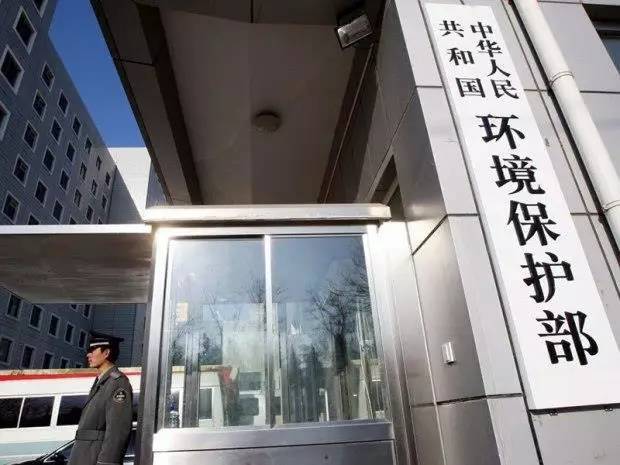
The Ministry of Environmental Protection will actively coordinate with relevant departments to promote the upgrade of vehicle oil products. At present, the technology for oil products meeting the China VI standard has also been preliminarily developed. The General Administration of Quality Supervision, Inspection and Quarantine and the Standardization Administration of China have also approved and issued the national standards for China VI vehicle gasoline and diesel in the same period. At the same time, key regions with special needs for atmospheric environment management may implement the China VI emission limits ahead of schedule.
Higher emission standards can improve air quality and effectively alleviate the current smog situation in many parts of our country. However, there are also many problems to be solved. For example, under the current China V environment, some provinces do not allow “China IV” vehicles to be registered. In the future, under the China VI environment, China V vehicles will definitely be suppressed, and the price for resale will inevitably decrease. At the same time, the costs incurred by auto companies in developing new emission systems will eventually be included in the vehicle price and passed on to consumers. With all this going back and forth, the cost of buying a car is increasing while the price of selling a car is decreasing, which is really not good news for the vast number of consumers.