
China VI Delayed in Beijing, Tianjin, Guangzhou, Shenzhen
Date:2026-10-28
Page views:
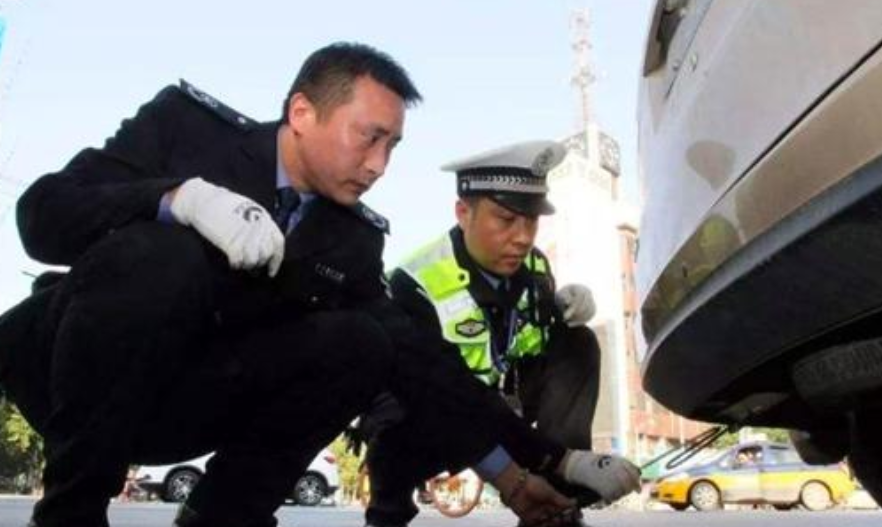
Since 2018, there have been continuous reports that China VI emission standards are approaching, with some regions even reporting that they would be implemented in 2019. But by the end of 2018, many regions had postponed the China VI timeline. For example, it was previously reported that Beijing would officially implement the “China VI” emission policy in January 2019 — so where did the much-anticipated “China VI” go? It has left some people who were waiting for China VI to buy China VI vehicles thoroughly confused.
Many regions have announced they will postpone the “China VI” emission policy
Beijing: On December 12, it was learned from relevant Beijing municipal government departments that the previously published draft for comments, “Beijing region to implement China VI emission standard Phase A on January 1, 2019,” has been rejected, and the official implementation of “China VI” for light-duty fuel vehicles will be delayed to January 1, 2020.
Shenzhen: On November 1, 2018, Shenzhen took the lead in implementing the “China VI” policy for diesel vehicles, but after only one short month, it was forced to halt. Recently, the Shenzhen Municipal Information Commission submitted to the Shenzhen Municipal Government a request for providing a transition period for the city to advance implementation of China VI emission standards, which proposes to postpone the implementation of the “China VI” standard for motor vehicles (new vehicles) in Shenzhen to July 1, 2019.
Tianjin: On November 28, the Tianjin Environmental Protection Bureau, Public Security Bureau and other departments jointly issued a draft for comments on the “China VI” policy, stating that the “China VI” emission standard is planned to be implemented starting July 1, 2019, but the notice is still in the comment-collection stage, meaning Tianjin will not implement “China VI” earlier than July 1, 2019.
Guangzhou: On November 9, the Guangzhou municipal government held an executive meeting that reviewed and approved the Guangzhou Work Plan for Advancing the Implementation of China VI Emission Standards for Light-duty Vehicles (the “Plan”), postponing the “China VI” emission standard for light vehicles — originally planned to start January 1, 2019 — to March 1, giving citizens more transition time.
In addition, many regions including Hebei, Henan and Hainan provinces have stated that the previous “China VI” implementation timeline was inaccurate, and the specific time is yet to be determined.
Postponing “China VI” — who does this actually embarrass?
From the full national rollout of “China V” only at the end of 2016 to the current gradual rollout of “China VI,” two years does feel rather fast. Not only are consumers not ready, but even automakers are caught off guard. Adjusting a vehicle model's emission standard is by no means as easy as typing on a keyboard. Beyond engine technology and three-way catalyst adjustments, technology upgrades, product production, market layout and sales policies are all affected.
As of November, only 554 models on the domestic market met the “China VI” standard, just 12% of China V models. The upgraded China VI standard is nearly 50% stricter than China V, posing exceptionally severe requirements on engine technology. Yet the domestic auto market is still dominated by China V vehicles; completing technological innovation and product iteration in a short time remains a daunting challenge for automakers.
Emission policy has even become a “roadblock” for many car buyers. Especially in the second half of this year, with “China V” and “China VI” policy in flux, many consumers holding cash pending purchase have stepped back to watch the show. Because there are still large numbers of unsold “China V” new vehicles on the market. “I want to buy a car before the Lunar New Year, but I'm worried that after next year's ‘China VI’ policy takes effect, the new car I buy won't meet the latest emission policy — it's frustrating, so I'll just wait.” Two months ago, a friend planning to buy a car told me he had his eye on a new Volkswagen model but, affected by the “China VI” rumors, has delayed until now.
Relevant data shows that entering November this year, domestic new car sales plummeted by more than 30% year on year, and dealer inventory coefficients for multiple brands reached alarm levels, with the auto market entering a “cold winter” rarely seen in 20 years. Thus, the postponed “China VI” policy is what manufacturers hope to see, what dealers hope to see, and what ordinary people hope to see.
Cui Dongshu, Secretary-General of the China Passenger Car Association, once said: “China VI” will further raise the dealer inventory warning index; if the new policy comes too fast with too short a buffer period, it will have a very adverse impact on terminal sales.
Earlier, Yan Ping, a National People's Congress representative and chairman of the board of directors of Guangxi Yuchai Group, suggested that the China VI standard implementation be postponed to 2022. Yan Ping believes that to meet the “world's strictest” China VI emission standards, China's auto industry must reach an internationally advanced level, which is basically unrealistic given the current state of the industry.
So when the “China VI” policy was originally planned and scheduled, was there truly reliable data to support it, or was it a hasty one-size-fits-all decision made in the name of “pursuing development” and “pursuing breakthroughs”? Otherwise, why has the once-firm advance now become hesitant and delayed?
Is it really reasonable to make cash-pending car buyers bear the unknown risks before and after “China VI” implementation, make dealers in the cold auto market bear the economic pressure of the “China VI” policy, and make numerous “China V” car owners who bought their cars just months ago into unexplained victims?
As car owners or prospective owners, what impact does “China VI” actually have on us?
Postponing “China VI” does not mean canceling it; that day will eventually come. So what exactly is the impact of the “China VI” policy on us?
The main impacts are two: vehicle resale value and on-road restrictions.
First, resale value. If you wait until “China VI” is officially implemented in July next year or January the year after, the most direct change for “China V” vehicles is that, for the same year and same model, “China V” vehicles will depreciate faster than “China VI” ones. For example, if you buy a “China V” Honda Fit now and plan to sell it in two years, when both “China V” and “China VI” Fits coexist in the used-car market, the same-year, same-condition “China V” Fit will naturally command a lower price than the “China VI” one.
Of course, if you replace cars infrequently and keep each one for eight or ten years, the used-car price at that point will be nearly the same as for “China VI” cars, so the impact will naturally be smaller.
Then, on-road restrictions. According to the earlier plan, China will implement the “China VI” standard in two steps. The first step is that no later than July 1, 2020, nationwide — regardless of region — the “China VI a” standard will be uniformly applied to vehicles on sale, licensing and registration. The second step, starting July 1, 2023, nationwide — regardless of region — the “China VI b” standard will be uniformly applied. In other words, “China VI a” is the transition between “China V” and “China VI b,” while “China VI b” is the true China VI standard, even stricter than Euro VI. The so-called “China VII” emission standard will come after 2026.
Judging by the pattern in which “China V” restricted “China I/II” on the road and “China VI” may restrict “China III,” “China V” vehicles will face on-road restrictions at least until after “China VII” ends, possibly around 2030 or later. If you buy a “China V” new car now and keep it without replacing it, you can still drive it for at least 12 years — and few people keep a car that long anyway.
So in summary, used-car resale value is the biggest issue; on-road restrictions do exist but are far off, with negligible impact.
In the future, China VI emissions will be the general trend, and models that do not meet emission standards will be phased out. This policy also applies to the special vehicle industry; major factories in Suizhou are actively taking countermeasures and developing China VI special vehicles, mainly sanitation vehicles such as sprinklers and garbage trucks, and will continue to improve going forward!