
Concrete Mixer Truck Regulations and Operating Precautions
Date:2026-10-28
Page views:
Concrete Mixer Truck Regulations and Operating Precautions:
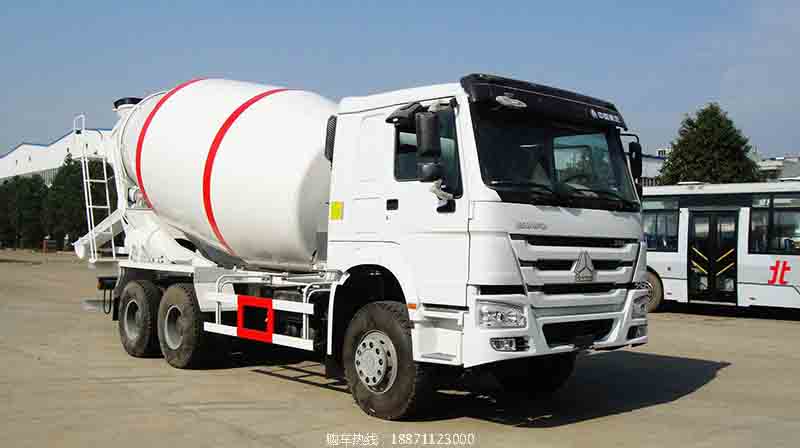
A mixer truck, also called a concrete mixer truck, is mainly used for the transportation of concrete and is an indispensable vehicle for construction site projects. Most concrete mixer trucks are relatively large in size. When not loaded with concrete, the vehicle has a lower center of gravity and runs more steadily during driving. However, once fully loaded with concrete, due to the relatively high drum body of the mixer truck, the vehicle's center of gravity rises accordingly. In recent years, traffic accidents caused by the overturning of concrete mixer trucks have been common. Recently, the China Vehicle Services Center issued the "Notice on Regulating the Announcement Management Requirements for Concrete Mixer Transport Trucks", which requires curbing the unhealthy development of the current mixer truck market and avoiding the occurrence of similar mixer truck overturning accidents.
Concrete Mixer Truck Regulations:
Notice on Regulating the Announcement Management Requirements for Concrete Mixer Transport Trucks — to all relevant automobile manufacturers and testing institutions:
In order to further standardize the Announcement management of concrete mixer transport trucks, after research and with the approval of the Industrial Policy Department of the Ministry of Industry and Information Technology, the relevant Announcement management requirements for concrete mixer transport trucks are hereby notified as follows:
1. The following three technical requirements shall be added for concrete mixer transport trucks in the Normative Requirements:
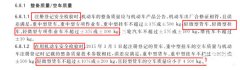
(1) Concrete mixer transport trucks shall comply with the provisions in the table below: when the drive axle adopts dual tires on each side of each axle and is equipped with an air suspension system, the limit value may be increased by 1000kg.
(2) The filling rate of the mixing drum of a concrete mixer transport truck shall be no less than 51.5% (definition of filling rate: the ratio of the agitating capacity of the mixing drum to its geometric capacity, expressed as a percentage).
(3) The agitating capacity of a concrete mixer transport truck shall comply with the following formula: agitating capacity ≤ loaded mass (kg) / concrete density (kg/m3) × 110%
Note: The concrete density shall adopt the recommended value of 2400kg/m3 from GB/T 26408-2011 "Concrete Mixer Transport Truck".
2. Management requirements for declared parameters:
(1) The "mixing volume" parameter in the other column of the original announcement parameters shall be corrected to the "agitating capacity" parameter, and the agitating capacity shall be defined in accordance with GB/T 26408-2011 "Concrete Mixer Transport Truck".
(2) The geometric capacity of the tank body, the installation inclination angle parameters of the tank body, the agitating capacity and the structural diagram of the tank body shall be added to the filing parameters. The diagram shall include the tank dimensions (such as total length of the tank, maximum outer diameter of the tank, diameter of the feed inlet, etc.), the tank material (referring to the material in contact with the medium, including aluminum alloy, stainless steel, carbon steel, non-metallic materials, etc.), the tank wall thickness, and the calculation process of the tank agitating capacity.
3. For relevant products in the Announcement that do not comply with the above technical requirements, each relevant manufacturer shall rectify the products in the Announcement before July 1, 2015. Products that still fail to meet the requirements after the deadline will have their Announcement suspended.
4. Starting from the 269th batch of Announcements, all relevant manufacturers and testing institutions shall carry out new product declaration and testing work in accordance with the above requirements.
From the data listed in the table above, it can be clearly seen that if the new regulations can be implemented, the mainstream large-tank mixer trucks currently on the market will be eliminated, and overloading will also be curbed. However, given the current situation in China where policies are met with countermeasures, it will still take a long time to rectify the mixer truck market back to normalization.
Concrete Mixer Truck Operating Precautions:
1. When driving on highways, the extended chute must be flipped and placed on the discharge chute and fastened with hooks, then rotated to a position perpendicular to the vehicle body, and the discharge chute and extended chute shall be locked to the frame with the locking device, to prevent shaking caused by improper fastening, which could cause personal injury accidents and affect the operation of other vehicles.
2. The capacity, quality and slump of the concrete delivered shall comply with the provisions in Chapter 2.
3. When the mixer truck is parked in an open area, before loading, the mixing drum shall be reversed first to discharge the accumulated water (or rainwater) and debris inside the drum, so as to ensure the quality of the delivered concrete.
4. When working near the discharge hopper and discharge chute, protective equipment shall be worn. Do not approach the hopper or the mixing opening, do not look inside, and do not touch the rotating mixing drum with your hands.
5. When a new truck is first put into use, a comprehensive inspection and test run must be carried out. Only when everything is normal may it be formally put into service.
6. At the time of delivery, if water evaporation is found and the slump is too low to meet the user's requirements, water may be appropriately added to the drum, and then discharge the concrete after rotating at a speed of 12—14r/min for 30 revolutions.
7. The continuous operating time of the working device shall not exceed 8h.
8. When the vehicle passes through bridges, tunnels, warehouses and other facilities, attention must be paid to the clearance height dimensions and the load-bearing capacity of the road surface, so as to avoid damaging the mixer truck.
9. During empty running and concrete delivery of the mixer truck, the mixing drum shall not stop rotating, so as to avoid partial damage to the raceway and rollers or the segregation of concrete.
10. The water tank shall be kept full of water at all times for emergency use.
11. Before adding water to the water tank, the air release valve must be opened to discharge the air inside the tank. After pressurizing and supplying water, the air reservoir must be closed in a timely manner.
Note on mixer truck use: the water tank is only pressurized when supplying water; do not drive on highways with a pressurized water tank.
Dangerous matters for mixer trucks: (1) The water inlet valve shall not be opened before the water tank is depressurized; (2) The vehicle shall not be driven before the water tank is depressurized.
12. When parked in winter, there shall be no residual water in the water tank and the water supply system.
13. Whether the discharge chute and extended chute need to be used together shall be determined by the requirements of the specific working position.
14. When the fully loaded concrete is rotating forward, if reverse rotation is required, the handle must be operated to stop the forward rotation steadily before operating the handle to reverse. It is strictly forbidden to operate the handle to reverse during forward rotation.
15. It is strictly forbidden to make sharp high-speed turns with a fully loaded mixer truck. Non-operating personnel are prohibited from operating the vehicle.
16. The center of gravity of the mixing drum is relatively high and slightly offset to the right (viewed from the rear of the vehicle). This offset will increase when the mixing drum rotates fully loaded, so great care must be taken when the vehicle turns. Particularly when turning left, extra attention is required, and the rotation speed of the mixing drum shall not exceed 3r/min. The relationship between the turning diameter and the maximum stable vehicle speed of the mixer truck is shown in Figure 2. When the road surface is uneven, the vehicle speed should be further reduced.
17. Depending on the different uphill gradients, the shape of the concrete in the mixing drum is shown in Figure 1. The driver shall load the concrete reasonably according to the gradient of the road being driven, so as to avoid spilling material on the road and polluting the environment. In Chapter 2.2 of this manual, the nominal agitating volume is verified at a slump of 120. When the concrete slump exceeds this value on an uphill slope, the loading volume should be appropriately reduced.
A mixer truck, also called a concrete mixer truck, is mainly used for the transportation of concrete and is an indispensable vehicle for construction site projects. Most concrete mixer trucks are relatively large in size. When not loaded with concrete, the vehicle has a lower center of gravity and runs more steadily during driving. However, once fully loaded with concrete, due to the relatively high drum body of the mixer truck, the vehicle's center of gravity rises accordingly. In recent years, traffic accidents caused by the overturning of concrete mixer trucks have been common. Recently, the China Vehicle Services Center issued the "Notice on Regulating the Announcement Management Requirements for Concrete Mixer Transport Trucks", which requires curbing the unhealthy development of the current mixer truck market and avoiding the occurrence of similar mixer truck overturning accidents.
Concrete Mixer Truck Regulations:
Notice on Regulating the Announcement Management Requirements for Concrete Mixer Transport Trucks — to all relevant automobile manufacturers and testing institutions:
In order to further standardize the Announcement management of concrete mixer transport trucks, after research and with the approval of the Industrial Policy Department of the Ministry of Industry and Information Technology, the relevant Announcement management requirements for concrete mixer transport trucks are hereby notified as follows:
1. The following three technical requirements shall be added for concrete mixer transport trucks in the Normative Requirements:
(1) Concrete mixer transport trucks shall comply with the provisions in the table below: when the drive axle adopts dual tires on each side of each axle and is equipped with an air suspension system, the limit value may be increased by 1000kg.
(2) The filling rate of the mixing drum of a concrete mixer transport truck shall be no less than 51.5% (definition of filling rate: the ratio of the agitating capacity of the mixing drum to its geometric capacity, expressed as a percentage).
(3) The agitating capacity of a concrete mixer transport truck shall comply with the following formula: agitating capacity ≤ loaded mass (kg) / concrete density (kg/m3) × 110%
Note: The concrete density shall adopt the recommended value of 2400kg/m3 from GB/T 26408-2011 "Concrete Mixer Transport Truck".
2. Management requirements for declared parameters:
(1) The "mixing volume" parameter in the other column of the original announcement parameters shall be corrected to the "agitating capacity" parameter, and the agitating capacity shall be defined in accordance with GB/T 26408-2011 "Concrete Mixer Transport Truck".
(2) The geometric capacity of the tank body, the installation inclination angle parameters of the tank body, the agitating capacity and the structural diagram of the tank body shall be added to the filing parameters. The diagram shall include the tank dimensions (such as total length of the tank, maximum outer diameter of the tank, diameter of the feed inlet, etc.), the tank material (referring to the material in contact with the medium, including aluminum alloy, stainless steel, carbon steel, non-metallic materials, etc.), the tank wall thickness, and the calculation process of the tank agitating capacity.
3. For relevant products in the Announcement that do not comply with the above technical requirements, each relevant manufacturer shall rectify the products in the Announcement before July 1, 2015. Products that still fail to meet the requirements after the deadline will have their Announcement suspended.
4. Starting from the 269th batch of Announcements, all relevant manufacturers and testing institutions shall carry out new product declaration and testing work in accordance with the above requirements.
From the data listed in the table above, it can be clearly seen that if the new regulations can be implemented, the mainstream large-tank mixer trucks currently on the market will be eliminated, and overloading will also be curbed. However, given the current situation in China where policies are met with countermeasures, it will still take a long time to rectify the mixer truck market back to normalization.
Concrete Mixer Truck Operating Precautions:
1. When driving on highways, the extended chute must be flipped and placed on the discharge chute and fastened with hooks, then rotated to a position perpendicular to the vehicle body, and the discharge chute and extended chute shall be locked to the frame with the locking device, to prevent shaking caused by improper fastening, which could cause personal injury accidents and affect the operation of other vehicles.
2. The capacity, quality and slump of the concrete delivered shall comply with the provisions in Chapter 2.
3. When the mixer truck is parked in an open area, before loading, the mixing drum shall be reversed first to discharge the accumulated water (or rainwater) and debris inside the drum, so as to ensure the quality of the delivered concrete.
4. When working near the discharge hopper and discharge chute, protective equipment shall be worn. Do not approach the hopper or the mixing opening, do not look inside, and do not touch the rotating mixing drum with your hands.
5. When a new truck is first put into use, a comprehensive inspection and test run must be carried out. Only when everything is normal may it be formally put into service.
6. At the time of delivery, if water evaporation is found and the slump is too low to meet the user's requirements, water may be appropriately added to the drum, and then discharge the concrete after rotating at a speed of 12—14r/min for 30 revolutions.
7. The continuous operating time of the working device shall not exceed 8h.
8. When the vehicle passes through bridges, tunnels, warehouses and other facilities, attention must be paid to the clearance height dimensions and the load-bearing capacity of the road surface, so as to avoid damaging the mixer truck.
9. During empty running and concrete delivery of the mixer truck, the mixing drum shall not stop rotating, so as to avoid partial damage to the raceway and rollers or the segregation of concrete.
10. The water tank shall be kept full of water at all times for emergency use.
11. Before adding water to the water tank, the air release valve must be opened to discharge the air inside the tank. After pressurizing and supplying water, the air reservoir must be closed in a timely manner.
Note on mixer truck use: the water tank is only pressurized when supplying water; do not drive on highways with a pressurized water tank.
Dangerous matters for mixer trucks: (1) The water inlet valve shall not be opened before the water tank is depressurized; (2) The vehicle shall not be driven before the water tank is depressurized.
12. When parked in winter, there shall be no residual water in the water tank and the water supply system.
13. Whether the discharge chute and extended chute need to be used together shall be determined by the requirements of the specific working position.
14. When the fully loaded concrete is rotating forward, if reverse rotation is required, the handle must be operated to stop the forward rotation steadily before operating the handle to reverse. It is strictly forbidden to operate the handle to reverse during forward rotation.
15. It is strictly forbidden to make sharp high-speed turns with a fully loaded mixer truck. Non-operating personnel are prohibited from operating the vehicle.
16. The center of gravity of the mixing drum is relatively high and slightly offset to the right (viewed from the rear of the vehicle). This offset will increase when the mixing drum rotates fully loaded, so great care must be taken when the vehicle turns. Particularly when turning left, extra attention is required, and the rotation speed of the mixing drum shall not exceed 3r/min. The relationship between the turning diameter and the maximum stable vehicle speed of the mixer truck is shown in Figure 2. When the road surface is uneven, the vehicle speed should be further reduced.
17. Depending on the different uphill gradients, the shape of the concrete in the mixing drum is shown in Figure 1. The driver shall load the concrete reasonably according to the gradient of the road being driven, so as to avoid spilling material on the road and polluting the environment. In Chapter 2.2 of this manual, the nominal agitating volume is verified at a slump of 120. When the concrete slump exceeds this value on an uphill slope, the loading volume should be appropriately reduced.